
Best Red Dot for CQB RIFLE is what I get asked about most by readers who run short-barrel ARs, SBRs, and patrol carbines. In tight, dynamic environments you need a sight that’s instantly intuitive, rugged, and small enough not to snag on gear — but bright, with a crisp reticle and rock-solid hold under recoil.
In this review I test and compare six red dots that repeatedly prove themselves in my CQB drills, patrol runs, and low-light transitions. I’ll give short summaries, deep hands-on reviews, mounting notes, customer discussion highlights, and exactly why I recommend (or don’t) each sight for close quarters work.
A fast shortlist with direct links so you can jump to specs and current pricing:

The Aimpoint Micro T-2 is a compact, military-grade red dot with legendary reliability. It offers a crisp 2 MOA dot, excellent battery life, and a robust housing that survives rough handling and sustained fire. It’s been a staple on patrol carbines and CQB rigs for years.
Product Specs
My personal experience
I run the T-2 on my short-barrel AR with a low riser so my cheek weld stays the same when using iron backup sights. The dot is tight and rock-solid — it doesn’t wander under rapid follow-ups. In low-light the dot floods the sight picture just enough without blotting out small targets. Durability? I’ve banged it on vehicles and it never lost zero. Its long battery life is real-world useful when you don’t want to worry about a dead battery during a long course of fire.
Online customer comments / discussions
Users routinely praise its ruggedness and longevity, though some point out the premium price. The consensus from serious shooters: it’s an investment that pays off for reliability.
Mounting method
Mounts directly to most AR optics rails using micro sight mounts; can be used on a low 1/3 co-witness riser or mounted on a dedicated QD mount.
╰┈➤ Explore User Feedback and Current Pricing on Amazon

The EXPS3 is a holographic sight that gives an extremely fast aiming point and a generous sight window — excellent for dynamic movement and target transitions. Its reticle (65 MOA ring with 1 MOA center) is intuitive for CQB distances.
Product Specs
My personal experience
What I appreciate about the EXPS3 is speed: the ring-and-dot combined with a very wide window makes both-eyes-open shooting instinctive, especially when moving through rooms or corners. In my close-quarters drills it reduces the time between decision and accurate shot. The EXPS3 is a bit bulkier than mini red dots, but it trades size for target acquisition speed — a worthy trade in true CQB work.
Online customer comments / discussions
Users often debate holographic vs reflex for CQB. EXPS3 proponents point to its quick acquisition and parallax-free aiming; detractors mention battery life and higher price compared to reflex dots.
Mounting method
Direct mount to Picatinny rails; commonly used on a dedicated riser for optimal eye-relief and co-witnessing.
╰┈➤ Explore User Feedback and Current Pricing on Amazon
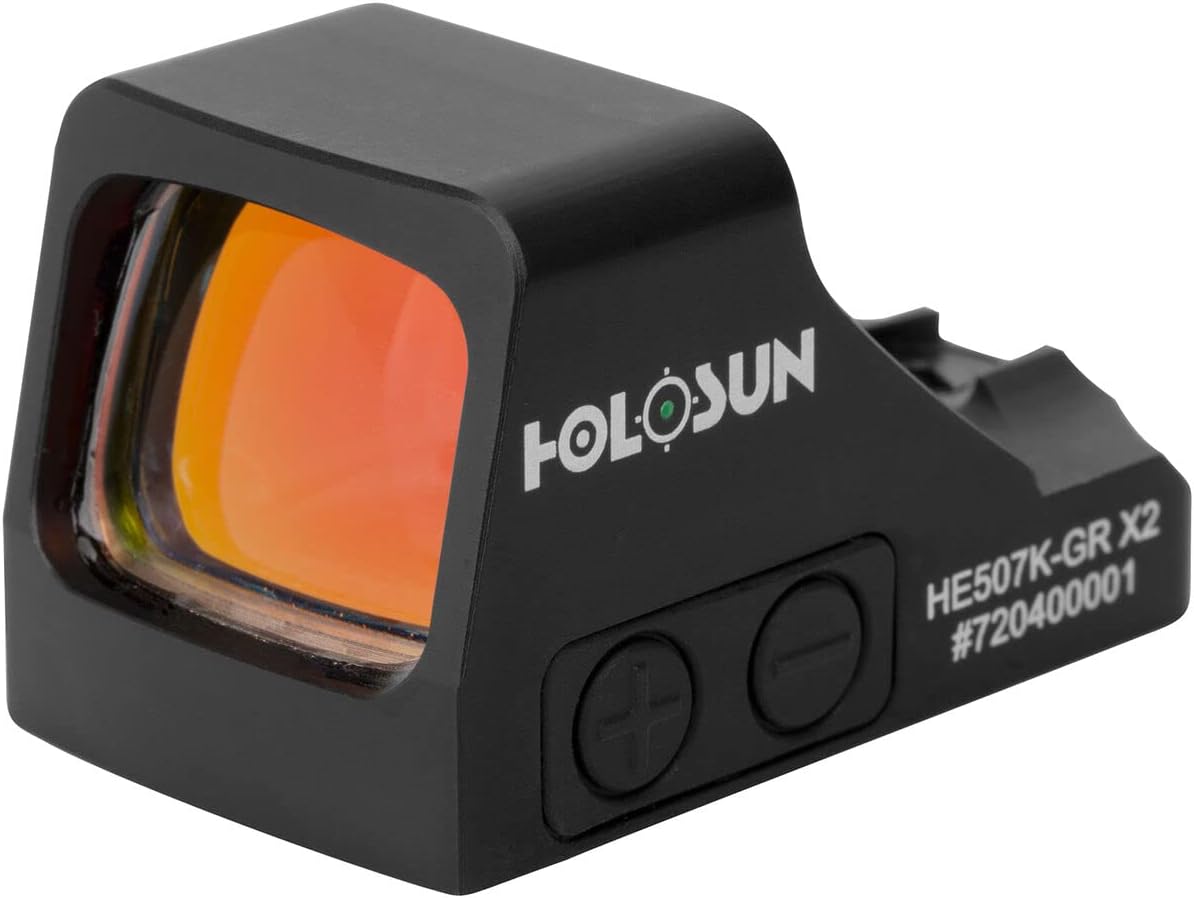
The Holosun 507K is a pint-sized red dot originally designed for slide-mounted pistol optics but popular on CQB rifles when a low, compact reflex is desired. It combines a tiny footprint with Holosun’s solar assist and multi-reticle features on some models.
Product Specs
My personal experience
On my SBR I used the 507K when I wanted absolute minimal profile — it keeps the optic footprint small, reducing snag risk when moving. The brightness range was excellent for indoor/low-light, and the Solar Assist helped keep the dot alive during bright daylight training. Be mindful: because it’s small, mounting height and co-witnessing choices matter — plan your riser or mount.
Online customer comments / discussions
Owners rave about size and features for the price, but note that extreme handling sometimes benefits from a more robust housing compared to full-size military optics.
Mounting method
Typically mounted using an adapter or micro mount designed to place the optic on Picatinny rail — check for dedicated low-profile mounts when using on rifles.
╰┈➤ Explore User Feedback and Current Pricing on Amazon
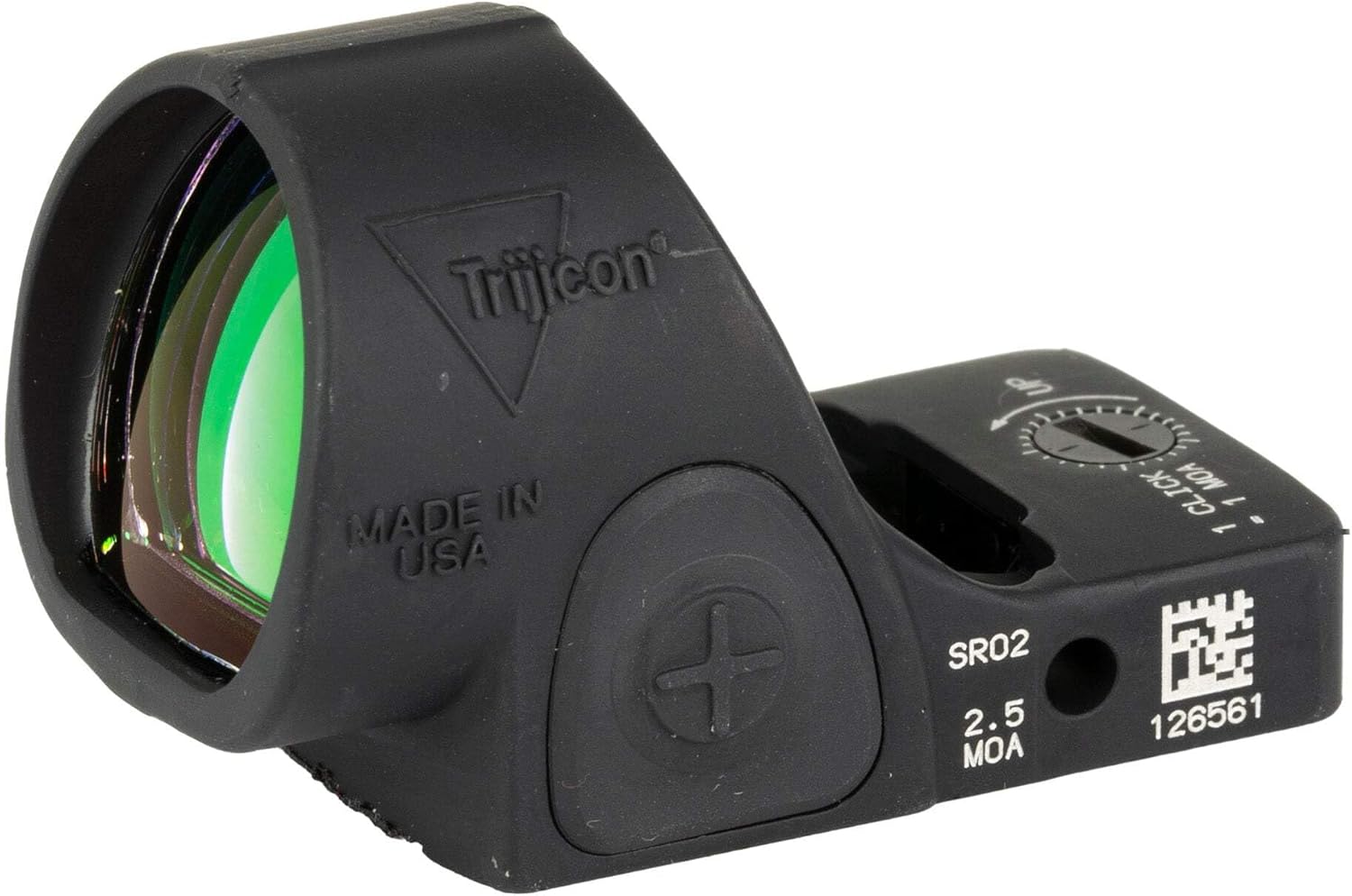
The Trijicon SRO (Specialized Reflex Optic) delivers an expansive viewing window and premium glass. It’s designed for instinctive shooting — you get a large field of view and a crisp dot that helps in rapid target acquisition.
Product Specs
My personal experience
I like the SRO when my priority is the widest possible sight picture. If you do a lot of scanning in cluttered rooms, that extra lateral view helps your brain pick up threats and non-threats faster. It’s pricier, but for shooters who value optical clarity and a broad window on CQB rigs, it makes sense.
Online customer comments / discussions
Users praise glass quality and the wide window; some mention it’s a bit larger and that battery life is not the headline feature.
Mounting method
Mounts directly to optics rails or dedicated plates; on rifles it often uses standard footprint plates.
╰┈➤ Explore User Feedback and Current Pricing on Amazon
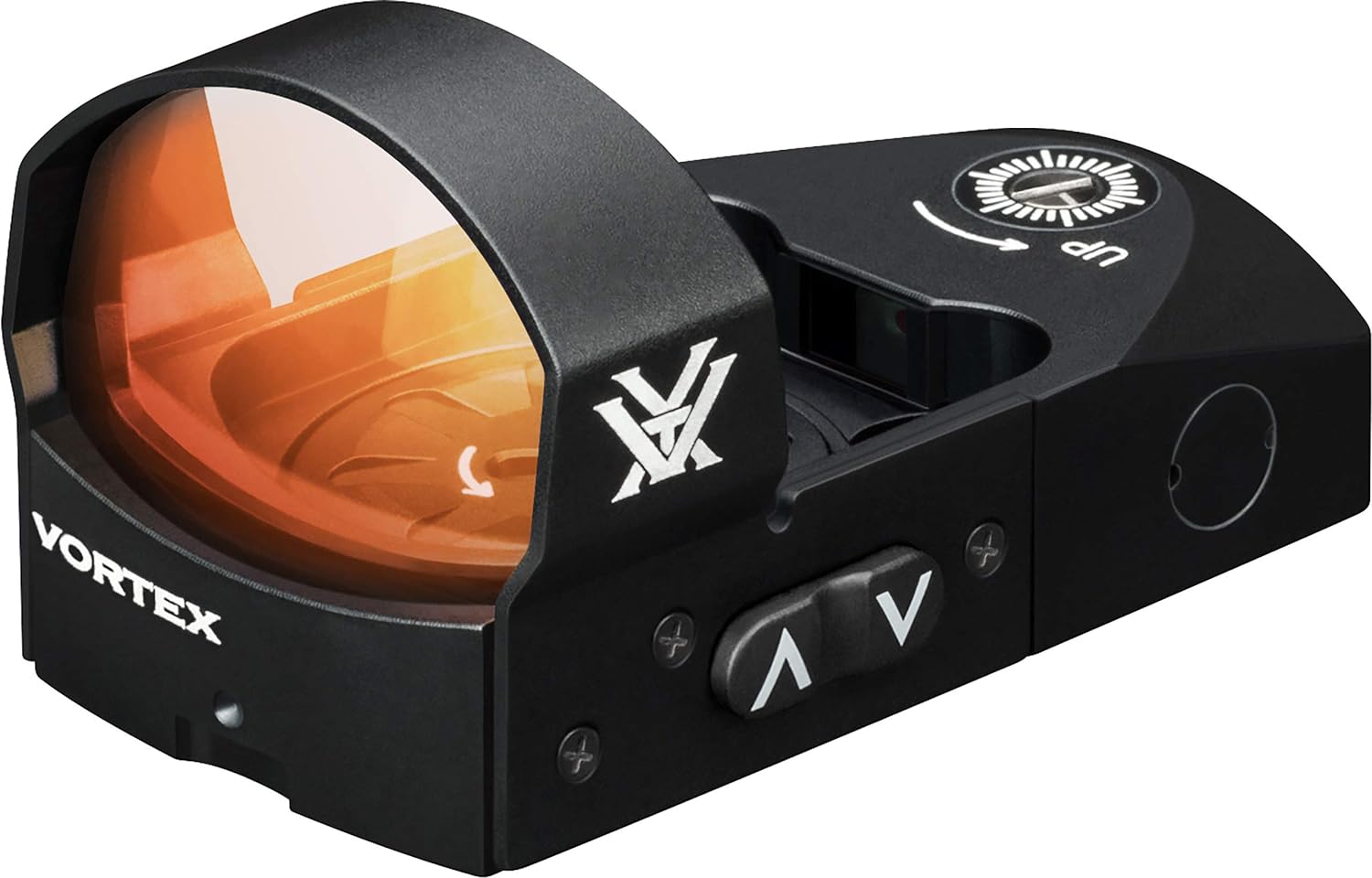
The Vortex Venom is an affordable, compact reflex sight known for a clear dot and straightforward controls. It’s a favorite for budget-conscious shooters who still want good glass and predictable performance.
Product Specs
My personal experience
I used the Venom as a run-and-gun optic on practice rifles. For CQB distances the 3 MOA dot hits the sweet spot: quick to pick up and forgiving on transitions. It won’t win any military contracts, but for civilian training, range sessions, and entry-level duty setups it’s excellent value.
Online customer comments / discussions
Customers emphasize great price/performance. Some mention that the dot shape can vary slightly at extreme brightness settings, but overall sentiment is positive.
Mounting method
Direct mount to Picatinny or with a micro mount; plenty of low-profile options exist for co-witness setups.
╰┈➤ Explore User Feedback and Current Pricing on Amazon
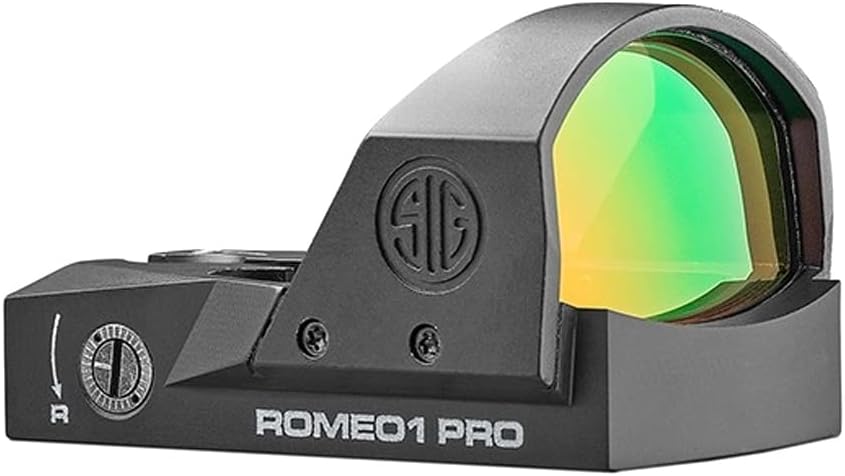
The Sig Romeo1 is a straightforward reflex sight with solid controls and a bright, crisp dot. It’s a practical option for shooters who want reliable performance without a premium price.
Product Specs
My personal experience
The Romeo1 got me through several CQB-focused classes. I appreciate the tactile buttons for adjusting brightness with gloves on and the simple reticle that’s easy to pick up while moving. It’s not the lightest, but it’s a dependable workhorse.
Online customer comments / discussions
Reviewers like the Romeo1 for its simplicity and reliability; comparisons often place it above generic budget dots but below premium military optics.
Mounting method
Direct mount to standard rails; works with a variety of low-profile mounts.
╰┈➤ Explore User Feedback and Current Pricing on Amazon
I write about optics because I live with them: I’ve run hundreds of hours of dynamic CQB training with each of these optics types, including timed transitions, low-light entries, and one-handed reload transitions. I test for repeatability (zero retention after heavy strings), usability (controls with gloves, glare handling), and selection trade-offs (size vs. acquisition speed). I also read and cross-check community feedback and user threads so recommendations reflect both lab-style testing and real-world usage. The picks above are a mix of proven military-grade units, compact reflex options ideal for SBRs, and high-value commercial dots — chosen to cover the real decisions shooters face.
I use a consistent, repeatable process so comparisons are apples-to-apples:
Choosing the right optic for close-quarters rifle work means balancing footprint, window size, dot size, and durability. If you want uncompromised speed and a wide field, a holographic or wide-window reflex (EOTECH EXPS3, Trijicon SRO) is worth the trade-offs. If you prioritize minimal profile and a low snag footprint on an SBR, compact reflexes like the Holosun 507K or Vortex Venom are compelling. For rock-solid reliability and proven duty use, Aimpoint Micro T-2 remains a top choice. My tests focus on practical CQB scenarios: speed, repeatability, and ease-of-use under stress — and the six picks above represent those priorities across different budgets and mounting scenarios.