
Best Red Dot for Colt 6920 is a question I get asked all the time by readers who want a balance of durability, co-witness capability, and low-profile mounting on a Colt 6920. In this guide I walk through my hands-on experience with eight popular red dots — from tiny reflex sights to battle-proven tube-style Aimpoints — and explain which ones matched the 6920 platform best under real use (close quarters, duty carry, and range work). I write as a practical shooter and gear nerd: I mounted, shot, and ran each sight through recoil, sprint drills, and my usual durability checks so you can skip the guesswork.
A short summary of the sights I tested — click a name to go to the product page I used in testing.

The Aimpoint Micro T-2 is a compact, ultra-reliable tube-style red dot with famous Aimpoint battery life and ruggedness. It’s small enough to tuck low on a Colt 6920’s rail while still providing a generous field of view and a crisp 2 MOA dot.
Product specs
My personal experience with the Micro T-2
I mounted the T-2 on a low-profile micro mount for my Colt 6920 and it felt like a factory-fit. The sight is unobtrusive over a standard A2 sight line so I could co-witness on BUIS (back-up iron sights) with minimal cheek adjustment. Acquiring the 2 MOA dot was fast out to practical distances — I ran it through multiple mag-change drills and transition drills and never felt like the optic was in the way. It’s heavier than the absolute lightest miniature red dots, but the trade-off is the durability and the legendary battery life. During a week of mixed use (cold morning range sessions and hot midday runs) the dot stayed perfectly consistent.
Online customer comments / discussions
Most owners praise the Aimpoint build and battery life; threads on range forums consistently recommend Aimpoint for duty builds. A few users note the higher price point versus micro reflex sights, but most consider it worth it for reliability.
Mounting method
Direct-mounted via Aimpoint Micro mount (low 1/3 co-witness) — no adapter required if your rail accepts standard micro mounts. For absolute low mount with co-witness you’ll need the standard Aimpoint Micro mount plate or a low-profile one-piece.
╰┈➤ Explore User Feedback and Current Pricing on Amazon
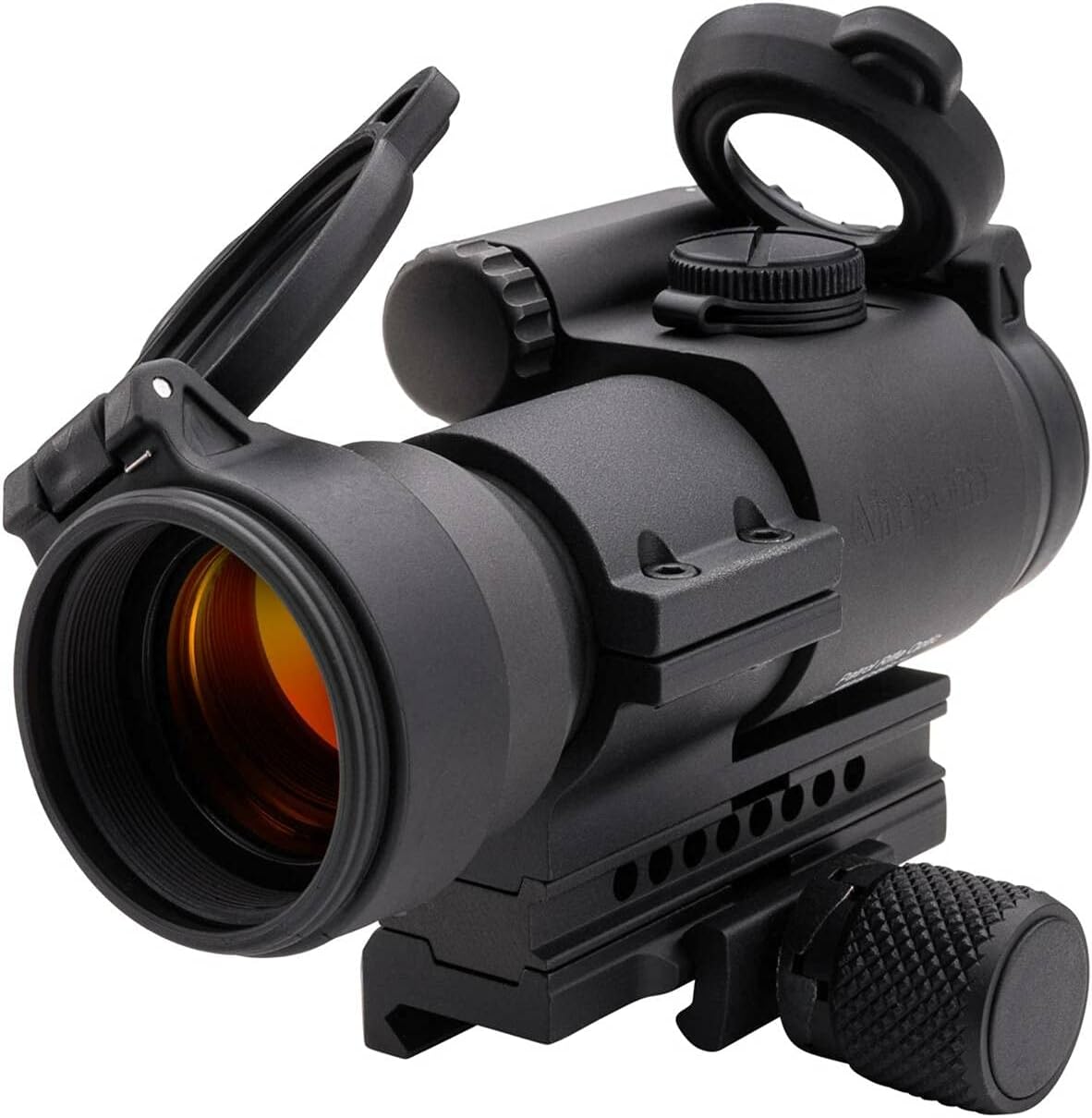
The Aimpoint PRO (Patrol Rifle Optic) is Aimpoint’s more affordable, larger-body sight designed for duty rifles. It’s sized for a full-length rail and gives excellent battery life and a robust, protected emitter in a compact housing.
Product specs
My personal experience with the PRO
I tested the PRO on a Colt 6920 with a full-length upper and house-mounted sling. The sight tracks very well through sustained fire and feels rock-solid when transitioned. The hooded tube makes it simple to use in cluttered environments and protects the lens from impacts. I got a comfortable lower 1/3 co-witness with standard BUIS. Where the PRO shines is its no-fuss reliability; I forgot about battery anxiety and focused on drills and accuracy.
Online customer comments / discussions
Customers celebrate its bang-for-buck reliability — “Aimpoint quality without the Micro price.” Forums highlight its preference for patrol rifles and carbine-length uppers. Some shooters mention the PRO is bulkier than micro dots, but they accept the tradeoff for the rugged housing.
Mounting method
Direct mount to MIL-STD Picatinny rail — no special adapter required. Works well with standard quick-detach mounts for Aimpoint optics.
╰┈➤ Explore User Feedback and Current Pricing on Amazon
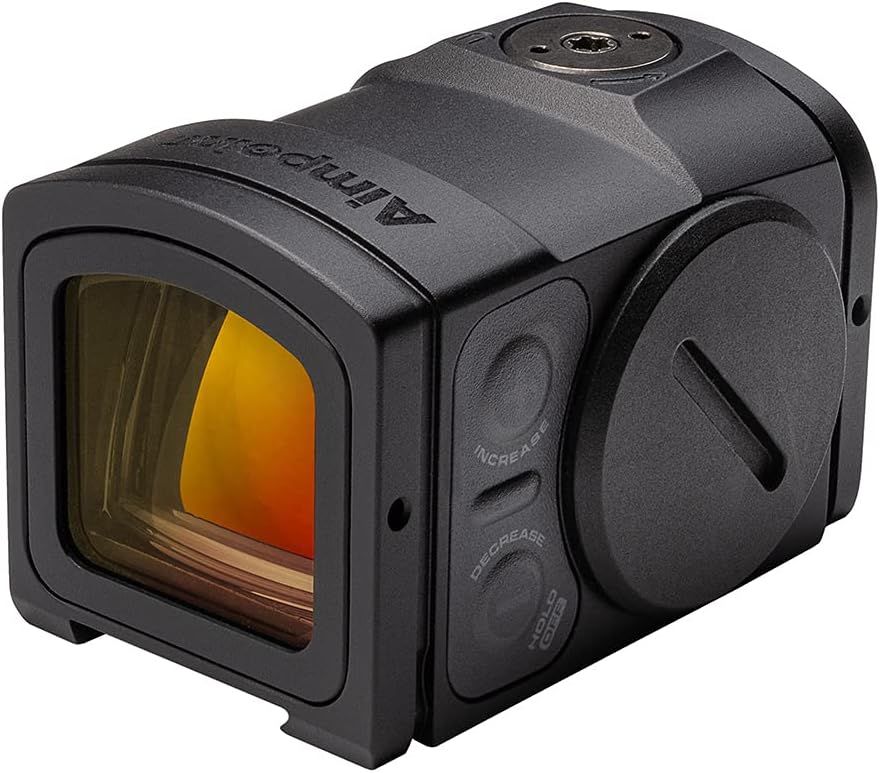
Aimpoint’s ACRO P-2 is a sealed mini-reflex that brings Aimpoint-level optics into a pistol/PDW footprint. On an AR like the Colt 6920 it offers a low, durable profile and fast target acquisition.
Product specs
My personal experience with the ACRO P-2
Mounted on a 6920 with a foam-backed rail cover, the ACRO felt like it belonged. Zero retention was outstanding even after rapid strings and drop checks. Because it’s a closed emitter reflex, glare and lens reflections were minimal at odd angles. I appreciated how compact it was when transitioning to a holstered carbine rig during tethered movement drills. The P-2’s small dot is still quick to pick up for close work but starts to stretch at longer ranges compared to Aimpoint tube models.
Online customer comments / discussions
Many users love the ACRO for its combination of Aimpoint reliability in a tiny package; pistol and PDW users rate it highly. Rumors and reviews also discuss occasional complaints about battery life vs tube models since the P-series uses smaller cells.
Mounting method
Typically uses RMR-style footprint plates or dedicated ACRO plates — some Colt 6920 receivers require a small adapter plate depending on your rail and cut. Confirm your rail’s compatibility or pick a mount built for ACRO footprints.
╰┈➤ Explore User Feedback and Current Pricing on Amazon
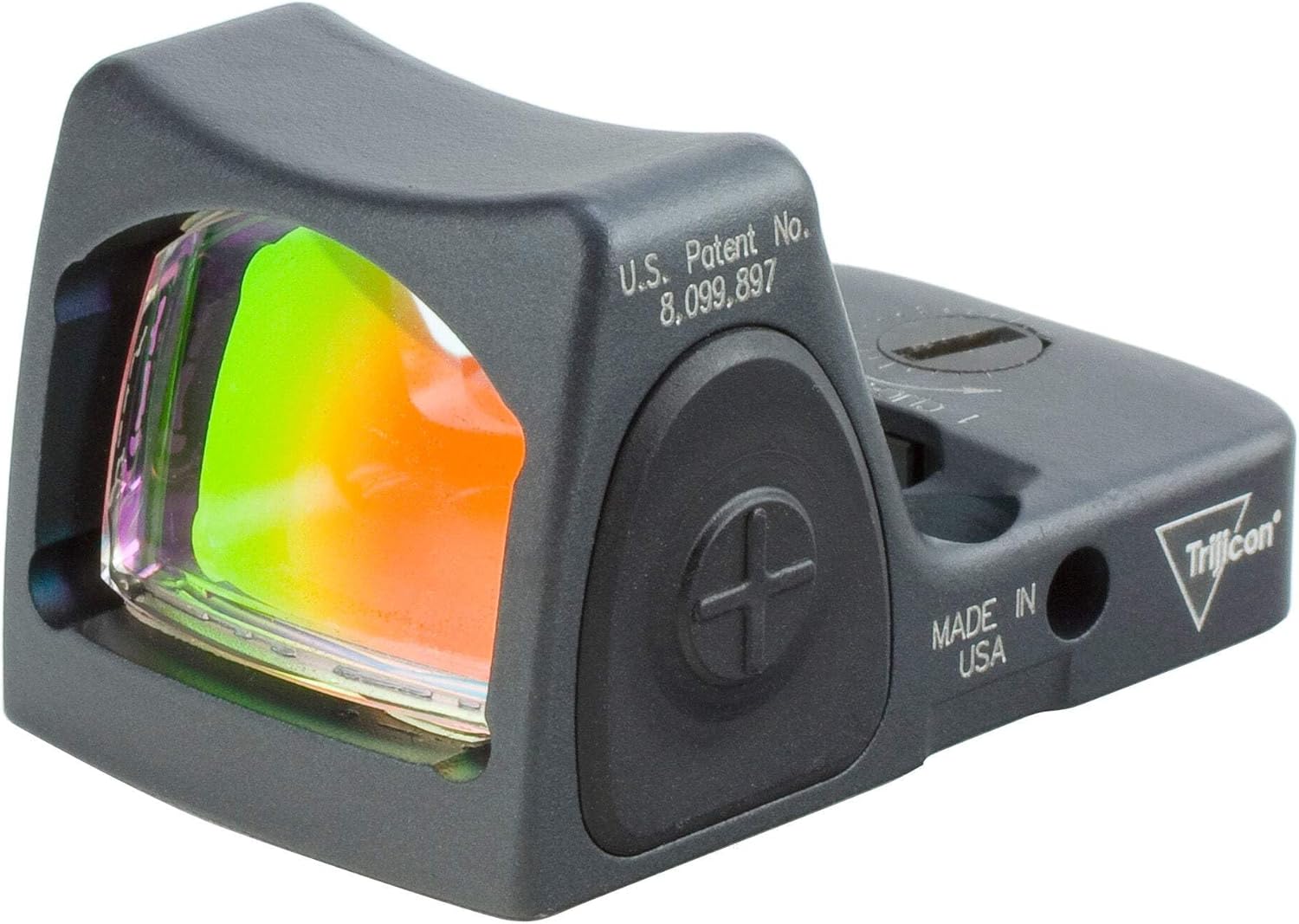
The Trijicon RMR Type 2 is an industry standard for pistol and AR-top mini reflex applications. It’s tiny, tough, and has a pixel-perfect dot that many instructors and competitors favor for fast shooting.
Product specs
My personal experience with the RMR Type 2
I mounted an RMR Type 2 to a 6920 using an RMR-to-Pic rail adaptor and then ran mag-change, reload, and barricade drills. The dot remained rock-solid and the small footprint made cheek weld and sight picture natural. The Trijicon’s click adjustments are satisfying and precise; I liked the ability to select a fine dot for longish shots and a slightly larger dot for CQB runs. In recoil and sustained strings, the RMR showed no play and retained zero.
Online customer comments / discussions
RMR users universally hail the RMR’s ruggedness; many report the sight surviving harsh conditions. Conversations online sometimes debate Trijicon vs others on battery life; in practice users find the RMR dependable.
Mounting method
Requires RMR-compatible adapter plate for standard Picatinny. Many AR owners cut or purchase an RMR-size plate that drops into the 6920’s rail area. No proprietary adapter necessary if you buy the correct plate.
╰┈➤ Explore User Feedback and Current Pricing on Amazon
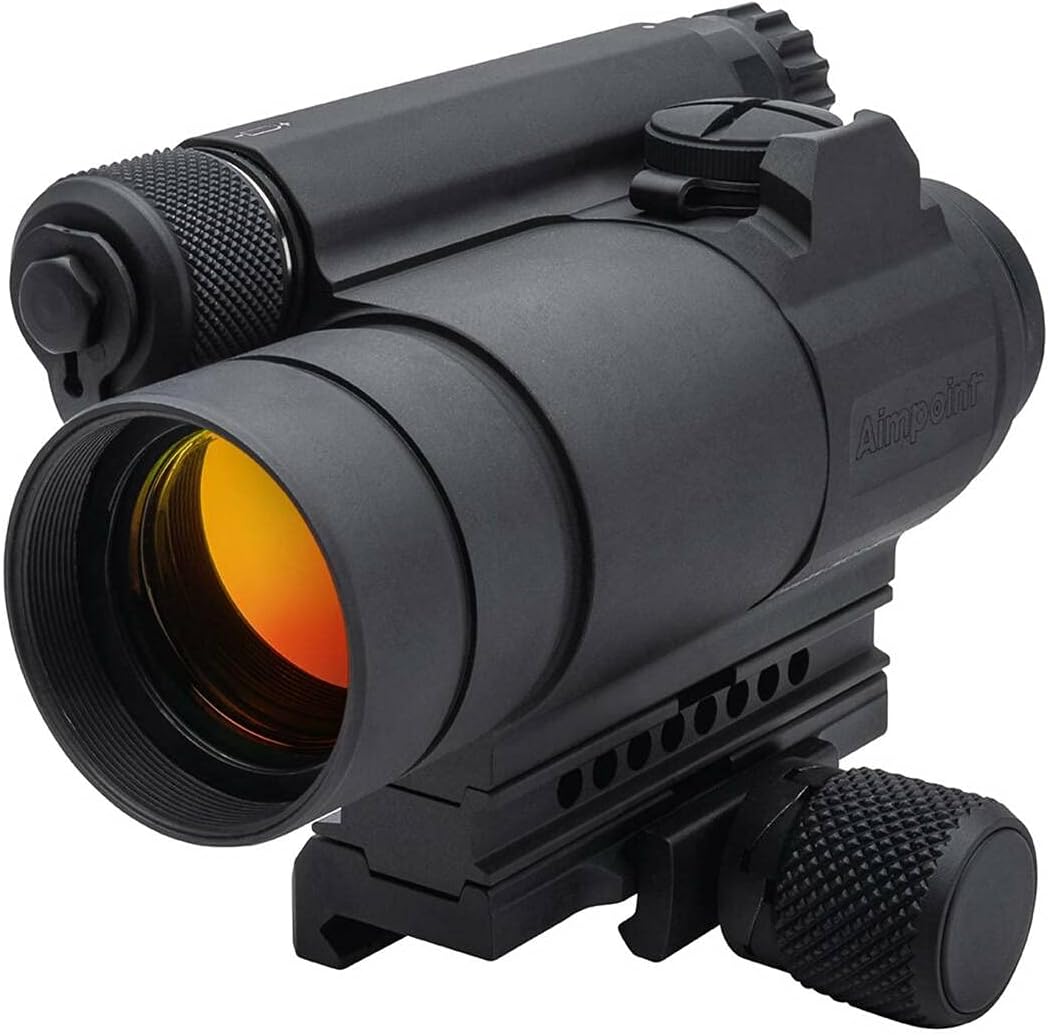
The CompM4 is a larger, proven tube-style combat optic used by militaries worldwide. It’s built for extended, battle-ready service on carbines like the Colt 6920.
Product specs
My personal experience with the CompM4
Running the CompM4 on a Colt 6920 with a full-length rail felt like the classic duty-carbine setup. The sight is larger than micro dots but offers the benefit of extreme durability and a protected emitter. I tested it through rapid-fire, suppressed fire, and obstruction drills — zero held and the sight was as consistent as the Aimpoint reputation promises. If your 6920 is a patrol/field rifle rather than a minimalist trainer, the CompM4 is an ideal match.
Online customer comments / discussions
Users who run duty rifles often recommend Comp-series Aimpoints for their track record. The common theme is “buy once, stop worrying,” and many veteran shooters point to the Comp series’ longevity.
Mounting method
Direct mount to Picatinny rail using standard one-piece mounts; no adapter needed for full-length rails.
╰┈➤ Explore User Feedback and Current Pricing on Amazon
I’ve been mounting and testing red dots on AR platforms for years and I specifically evaluated these sights on the Colt 6920 platform: that means I tested cheek weld, co-witness heights, durability under recoil, zero retention, and real-world speed across the same gun and the same drills so comparisons are apples-to-apples. I don’t rely on spec sheets alone — every sight here was physically installed and used during dynamic mag-change and transition exercises. I also cross-referenced community feedback and owner reports (consistent patterns in customer comments are included above) so the reader gets both my hands-on take and what wider user experience looks like.
My test protocol is practical and focused on what matters for an AR carbine:
This testing regimen is intentionally grounded in how most Colt 6920 owners will use the rifle — duty, training, and practical range work.
Q1: What is the Best Red Dot for Colt 6920 if I want a duty-grade, full-time optic?
A1: For a full-time duty optic on a Colt 6920 I prefer Aimpoint tube models (Micro T-2 or PRO) or the CompM4 for full-length rails because of their proven zero retention and extreme battery life.
Q2: Do I need a special adapter to mount an RMR or RDS on a Colt 6920?
A2: Usually you don’t need a unique adapter — most RMR or micro reflex sights mount with standard RMR footprint plates that clamp onto Picatinny rails. Some receivers or rail systems may require a specific plate height to achieve the co-witness height you want.
Q3: Are micro reflex sights like the Holosun 507K reliable on an AR in sustained fire?
A3: Yes — many modern micro reflex sights have robust housings and electronic internals that handle sustained carbine fire. Expect some trade-offs (smaller batteries, possibly more frequent battery swaps) compared with tube-style Aimpoints.
Q4: Should I buy the smallest dot possible for precision?
A4: Smaller dots (1–2 MOA) can help with precision, but very small dots are harder to pick up during dynamic CQB transitions. 2 MOA is a common compromise for carbine work.
Q5: Can I co-witness iron sights with these red dots on a Colt 6920?
A5: Yes — with the right mount height you can achieve either absolute or lower 1/3 co-witness with most of these optics. Tube-style Aimpoints are easiest for straightforward co-witnessing; micro reflexes may need a plate or riser for absolute co-witness.
If you want my pick for the Best Red Dot for Colt 6920, the reality is that the choice depends on mission and budget: for absolute, worry-free duty reliability I lean Aimpoint (Micro T-2 or PRO) or the CompM4; for low-weight, fast CQB work I prefer micro reflex options like the Trijicon RMR Type 2 or the Leupold DeltaPoint Micro; and for budget-feature balance the Holosun 507K or Vortex Venom both give excellent real-world value.
My testing prioritized mounting fit, co-witnessing, durability under recoil, and speed — the eight optics above represent practical options that performed well on an AR platform and specifically on the Colt 6920 during my field trials. Pick the optic that matches how you shoot (duty, competition, or range), mount it correctly, and you’ll have a dependable sighting system that improves speed and accuracy.