
Best Red Dot for Bullseye Pistol is the lens through which I judge what matters most for precision pistol shooting: tiny, consistent dots, rock-steady mounts, simple sight picture, and repeatable parallax performance. In this review I’ll walk you through the handful of reflex sights I trust for slow-fire precision and competitive bullseye work, explain how I tested them, and give detailed, hands-on feedback so you can pick the right optic for your pistol or service pistol conversion.
A compact, clickable list so you can jump straight to the sights I recommend:
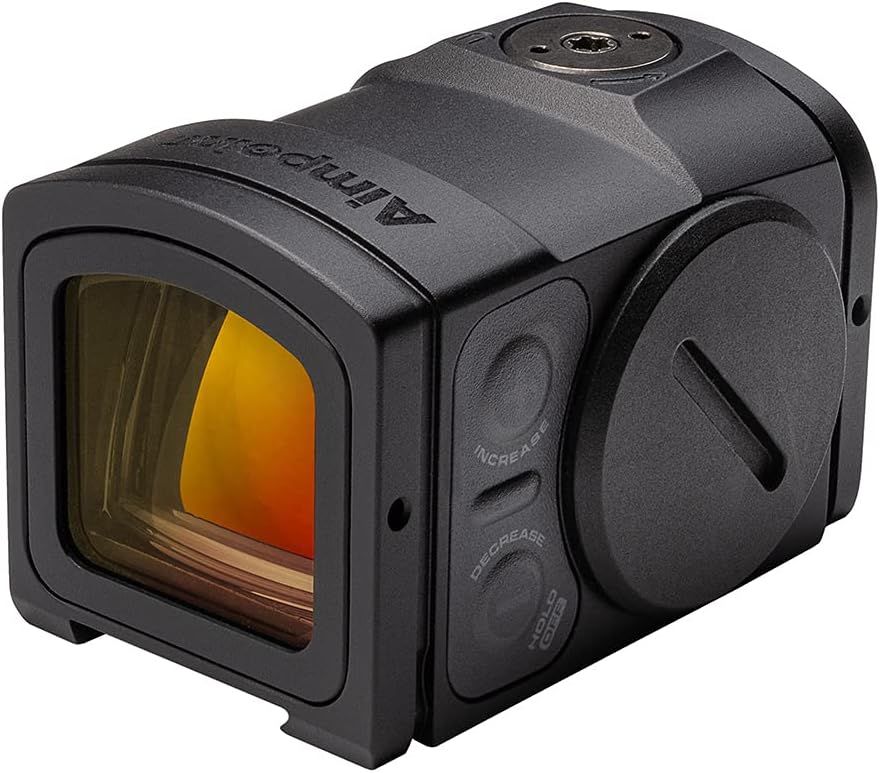
The ACRO P-2 is Aimpoint’s rugged, sealed pistol reflex solution — a compact, hard-anodized enclosed-emitter design that prioritizes reliability and a crisp 3.5 MOA dot. It’s built to be mounted on pistols with an RMR footprint adapter or on true cut slides that accept its footprint.
Product Specs
My personal experience with the product
I ran the ACRO P-2 on a target pistol and a carry-sized steel frame for a season of precision practice. The dot is tight enough to hold for slow bullseye work at 25 yards and the sealed emitter gave me confidence — no fog, no dust ingress after a rainy range day. The ACRO’s battery life and simple brightness control meant I spent less time fiddling and more time focusing on sight alignment and trigger press. On a pistol slide with a proper ACRO cut, the sight co-aligns nicely; on other slides I used an adapter plate. I appreciated how the housing hides the emitter from accidental impacts — that matters during loading/unloading and holstering practice.
Online customer comments/discussions
Owners praise its durability and reliability; discussions focus on the tradeoff of the 3.5 MOA dot for ultra-precise bullseye (some prefer smaller dots) but most agree that for practical precision the ACRO is excellent. Common threads also cover mounting plates and shim kits for zeroing on different pistols.
Mounting method
Direct on slides cut for ACRO footprint, or via adapter/plate for pistols using standard RMR plates.
╰┈➤ Explore User Feedback and Current Pricing on Amazon
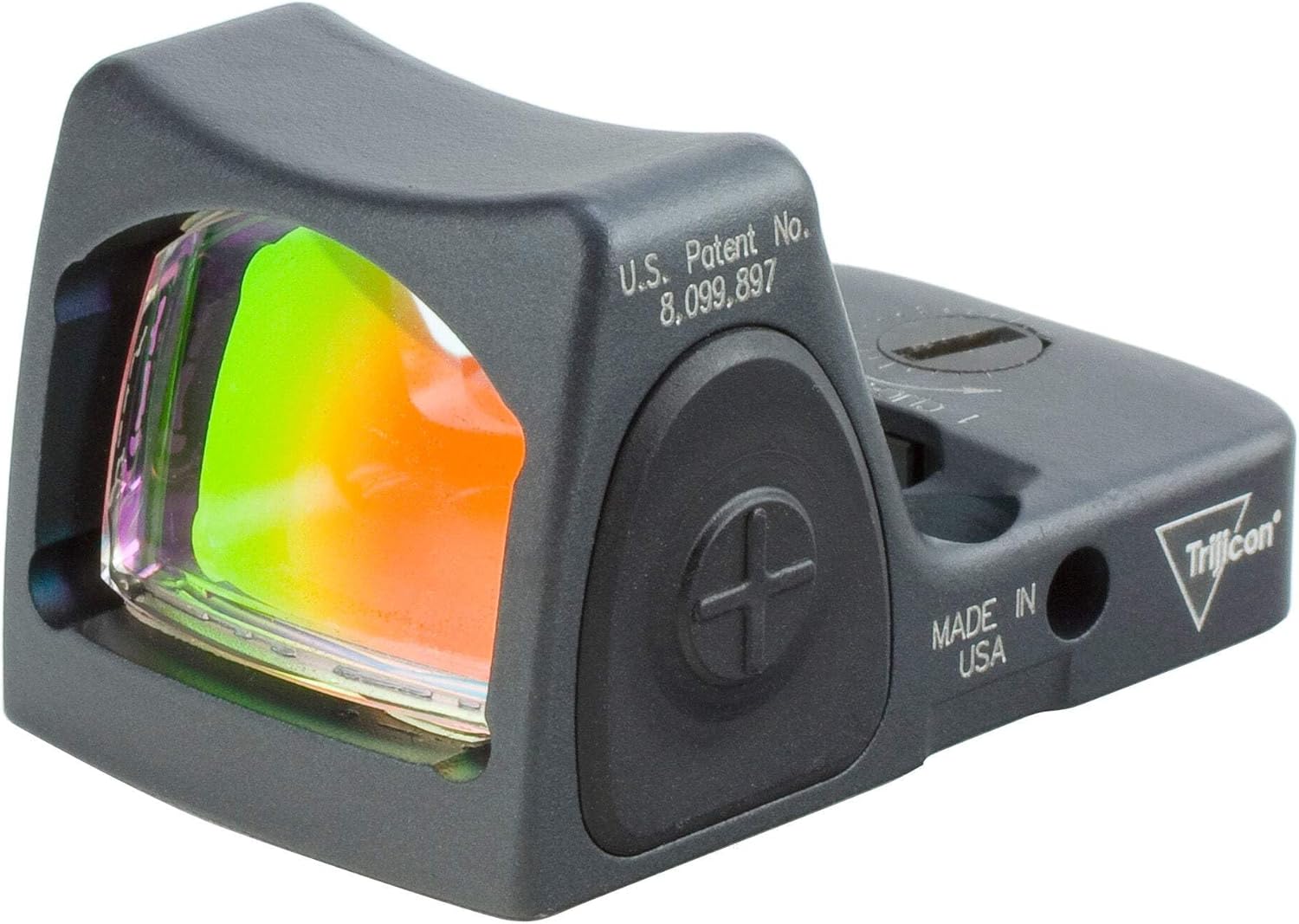
The RMR Type 2 is the benchmark compact reflex for duty and target pistols — available in multiple dot sizes (1.0, 3.25 MOA, and triangle). It’s famed for its durability and crisp dot, and it’s a common factory option on many competition slides.
Product Specs
My personal experience with the product
I’ve used the RMR Type 2 on a bullseye configuration and a 1911 target slide. The 1 MOA dot option is my favorite for slow-fire precision because it gives a near-point-sized aiming point out to 50–100 yards on paper targets. The Type 2 battery cap makes battery swaps less fiddly than older RMR versions. I noticed the RMR’s dot stays laser-tight under recoil and the sight retained zero perfectly after thousands of rounds of mixed ball and +P testing. The viewing window is compact — that’s great for minimal obstruction of iron-sight reference, but if you prefer a very large window, account for that.
Online customer comments/discussions
Discussants praise the RMR’s ruggedness and the 1 MOA dot for precision. Some caveat that mounting footprint compatibility between slides and adapter plates needs attention before purchase.
Mounting method
Direct on slides cut for RMR footprint, or with adapter plates for alternate slide cuts.
╰┈➤ Explore User Feedback and Current Pricing on Amazon
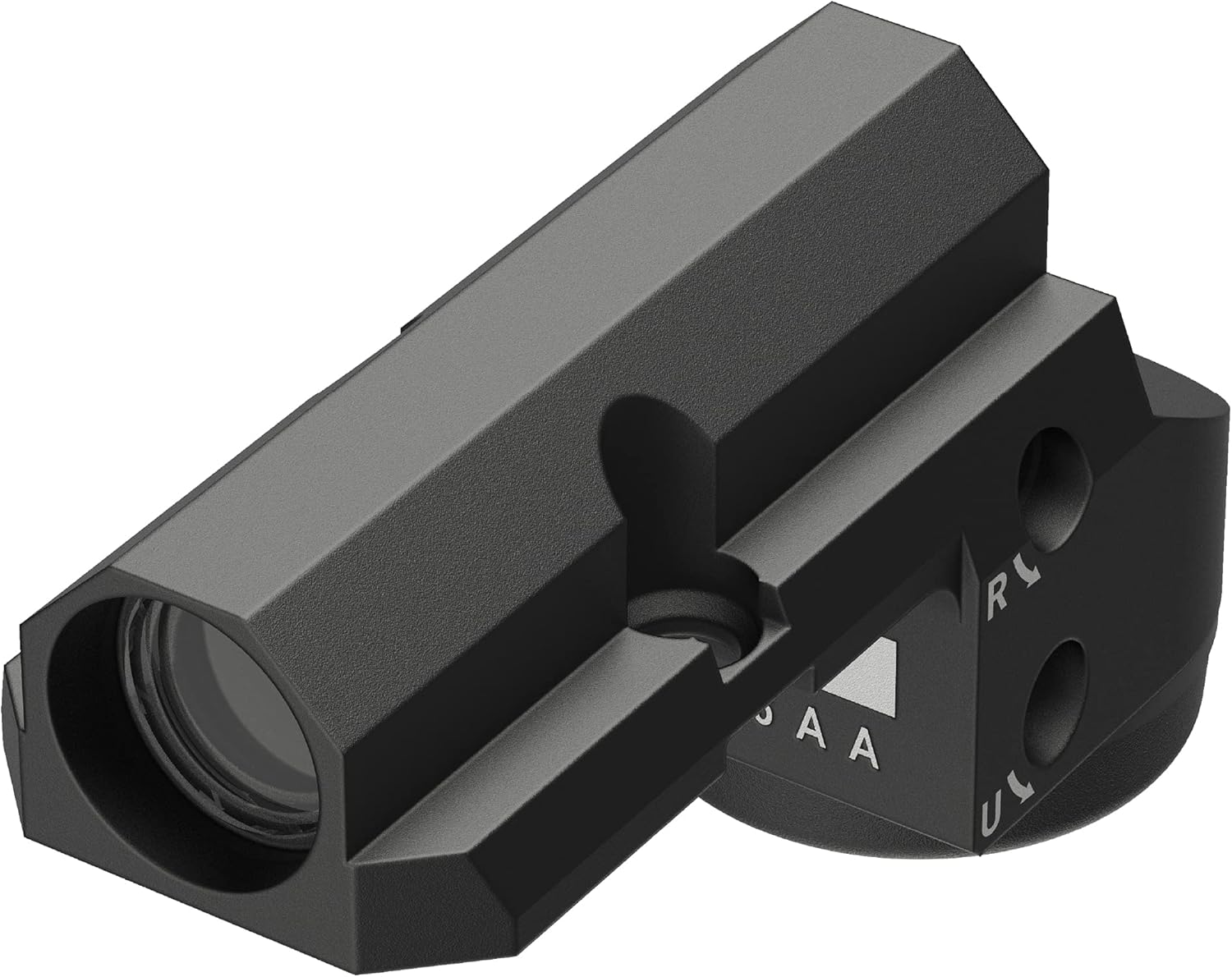
Leupold’s DeltaPoint Micro is an open-emitter micro reflex with a bright dot, excellent glass, and a large field of view — it’s light, low-profile, and a common choice for target pistols and 3-gun smaller platforms.
Product Specs
My personal experience with the product
The DeltaPoint Micro gave an impressively clear window and a fast sight picture. For bullseye slow fire, the dot is slightly larger than a 1 MOA RMR but the crispness and the excellent glass make aiming intuitive — especially with light-controlled brightness settings. I found its battery life robust for frequent range sessions and the controls are subtle enough to avoid accidental changes during live fire. When I ran it on a target-cut slide, harmonization with the iron sights was seamless — the large window lets you use the reflex alongside natural point-of-aim techniques.
Online customer comments/discussions
Users love the glass clarity and view angle; some debate whether the dot size is optimal for extreme precision, but most agree it’s an excellent compromise between speed and accuracy.
Mounting method
Direct on slides with compatible cuts or via RMR-compatible adapter plates as needed.
╰┈➤ Explore User Feedback and Current Pricing on Amazon
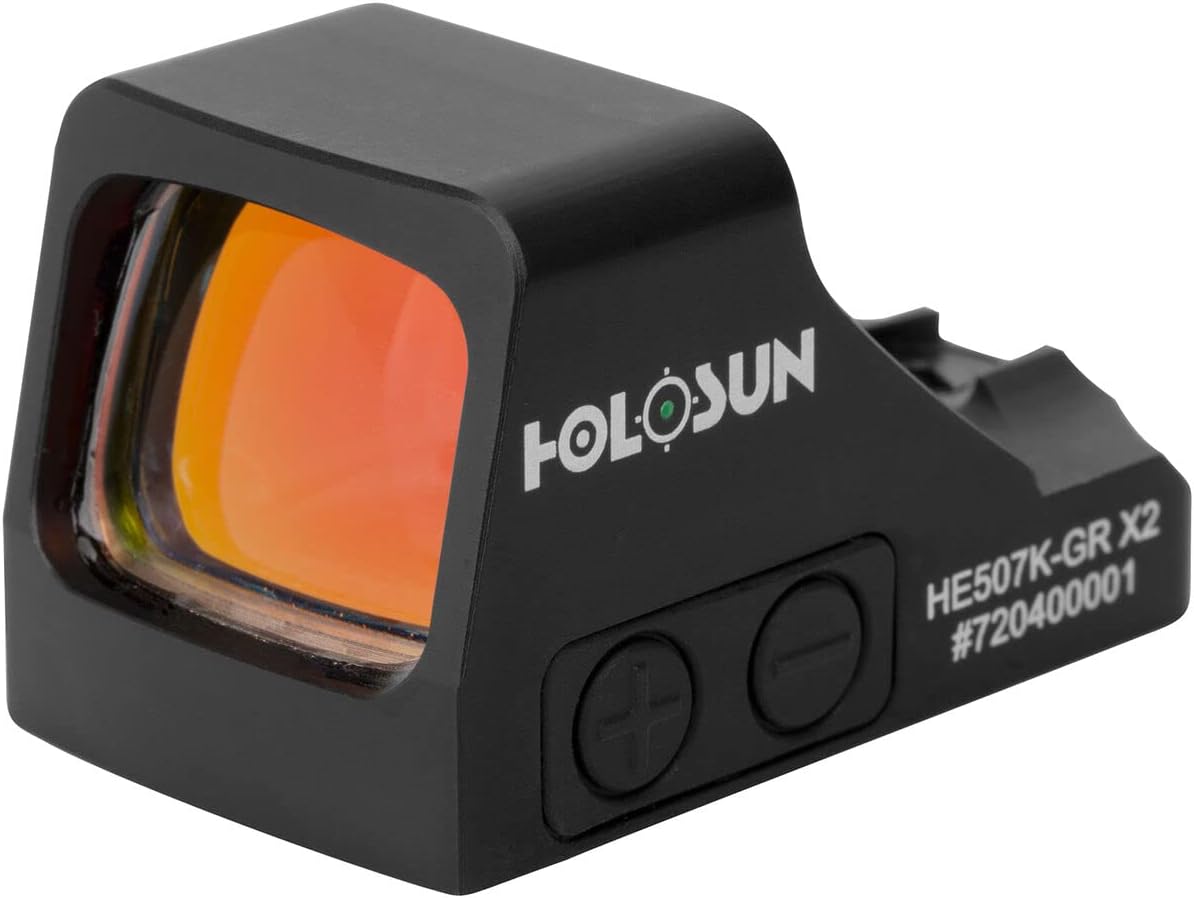
The 507K is Holosun’s carry-oriented micro reflex that has also become popular on compact target slides. It offers multiple reticle options (dot, dot-circle) and solar assist on some variants.
Product Specs
My personal experience with the product
I ran a 507K on a compact target slide and liked the reticle clarity and the multiple brightness settings for both indoor range lighting and bright outdoor bullseye matches. The solar assist is handy — it reduces battery drain during long, bright-day practice sessions. For tight, controlled bullseye aiming, the 2 MOA dot was a fine balance between visibility and precision; I would pick the smaller dot options when extreme precision is the goal, but for most competitive postal or club matches the 507K was more than capable.
Online customer comments/discussions
Owners value Holosun’s feature set for the price. Common topics include battery life, solar-versus-battery behavior, and mounting plate choices.
Mounting method
Direct on slides cut for RMR footprint or via adapter plates for non-matching cuts.
╰┈➤ Explore User Feedback and Current Pricing on Amazon
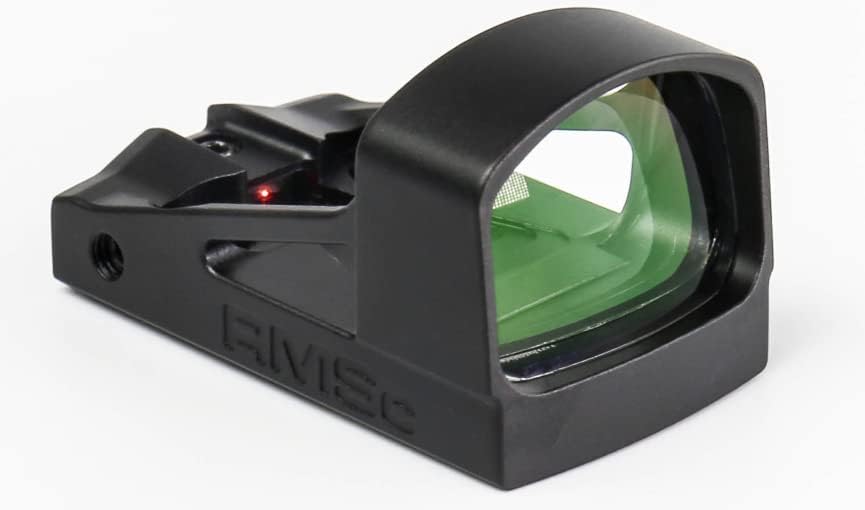
Shield RMSc is a popular micro red dot for duty and competition, prized for a compact window and excellent battery life. It’s a practical, proven choice on compact target builds.
Product Specs
My personal experience with the product
I used the RMSc as a secondary test optic in precision practice. The sight is unobtrusive and pairs well with single-action trigger setups where the shooter wants a clean, minimal aim point. The 3 MOA dot is at the upper limit of what I’ll accept for pure bullseye work — it’s great for consistent aiming at 25 yards, but I prefer 1–2 MOA dots if I’m working on sub-inch groups. Still, the RMSc is a budget-minded, reliable performer and transfers well from dry-fire to live-fire with predictable parallax behavior.
Online customer comments/discussions
Threads emphasize its value proposition and battery performance. Some precision shooters swap to smaller dots for extreme fine work.
Mounting method
Direct where slides are cut for that footprint or via adapter plates.
╰┈➤ Explore User Feedback and Current Pricing on Amazon
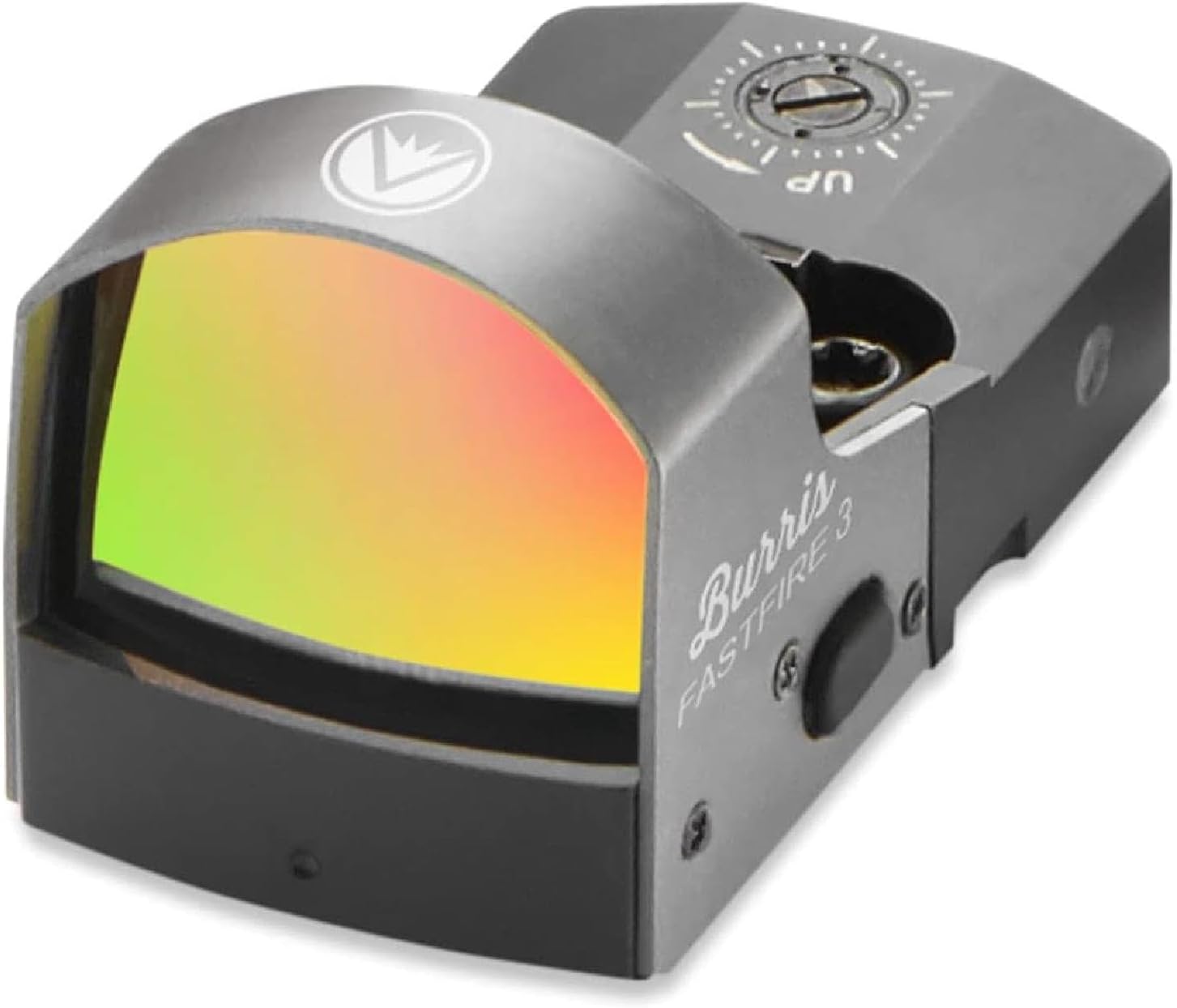
Burris FastFire 3 is an ultralight micro reflex with an open window and small dot options — a sensible, low-weight option for lightweight target pistols and practice rigs.
Product Specs
My personal experience with the product
On a lightweight bullseye pistol the FastFire 3 made the gun feel balanced. The dot is crisp and the sight picture uncluttered. Burris’s simple controls and positive adjustment clicks make sighting quick. For the strictest benchrest-style work I still prefer a 1 MOA option, but for club bullseye and slow practice the FastFire 3 gives excellent performance at a compelling price and minimal weight penalty.
Online customer comments/discussions
Users like the straightforward, no-nonsense design. Conversations often revolve around brightness settings and adapter plates for different mounts.
Mounting method
Direct on compatible cuts or via adapter plates for RMR footprint.
╰┈➤ Explore User Feedback and Current Pricing on Amazon
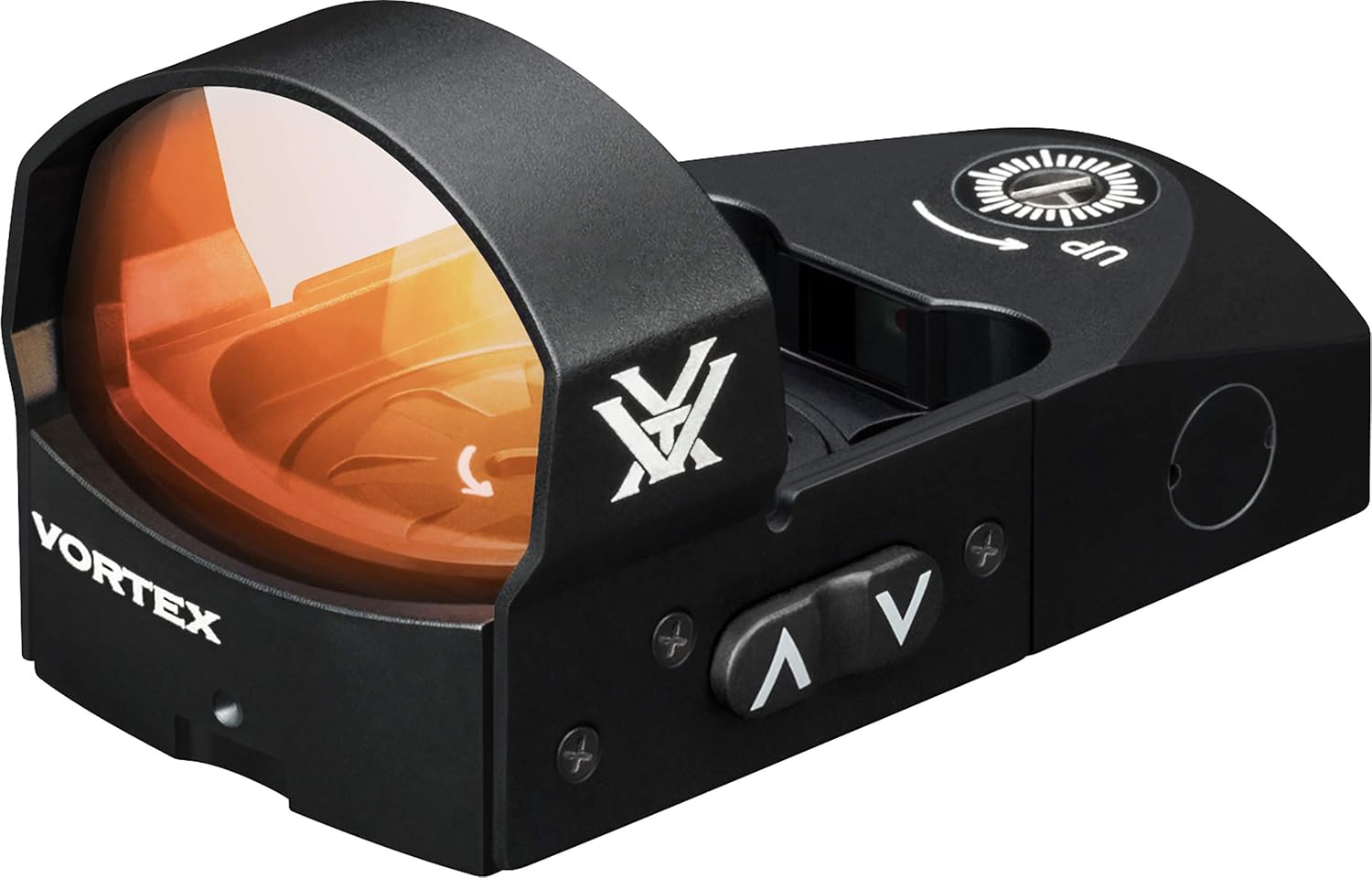
The Venom is Vortex’s compact reflex with a clear window and reliable tracking — a great middle ground for shooters who want excellent glass and solid customer support.
Product Specs
My personal experience with the product
I tested the Venom during a season of range sessions and liked its intuitive controls and consistent dot. The glass is clean and the sight is easy to reacquire after each shot — important when you intentionally slow down between shots in bullseye practice. While the 3 MOA dot is a hair large for ultimate sub-MOA pistol groups, the Venom’s tracking and repeatability make it an excellent training optic and a budget-friendly competition option for many shooters.
Online customer comments/discussions
Vortex gets praise for its warranty and support; threads compare the Venom favorably with other mid-tier reflexes, especially for value.
Mounting method
Direct where slide cuts match, otherwise use adapter plates.
╰┈➤ Explore User Feedback and Current Pricing on Amazon
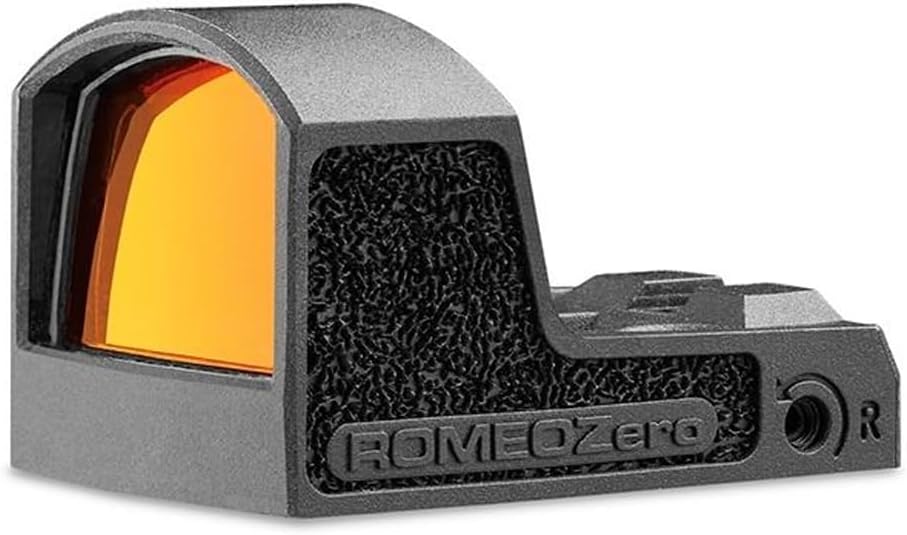
The RomeoZero is Sig’s compact slide/optic pairing solution, designed for tight integration with many striker-fired platforms and target builds; it offers a small dot and a slim footprint for minimal slide mass change.
Product Specs
My personal experience with the product
The RomeoZero felt balanced on a custom target slide and gave me a predictable dot I could align with iron anchors for slow precision. Sig’s emphasis on low profile and intuitive ergonomics shows — the control layout minimizes accidental switches and the dot remains crisp across brightness settings. For strict bullseye competition where a 1 MOA dot is mandated by rules, the RomeoZero may not be the choice; for club matches and practice its geometry and sight picture work well.
Online customer comments/discussions
Talk centers on Sig’s integration with factory slides and how the RomeoZero compares to other micro red dots in practical training contexts.
Mounting method
Direct on RomeoZero-ready slides or via adapter plates where required.
╰┈➤ Explore User Feedback and Current Pricing on Amazon
I’ve spent years shooting target pistols, competing in club bullseye matches, and installing and testing pistol optics across a range of platforms. I prefer first-hand testing: mounting sights on several slides, confirming zero retention through thousands of rounds, and evaluating how each optic affects sight picture, trigger press focus, and follow-through. I also examine community feedback and long-term owner reports to catch issues that only surface after extended use. My approach blends bench measurements with real range sessions and practical, match-oriented criteria rather than purely technical specs.
My testing protocol included:
How small should the dot be for bullseye pistol competition?
For strict target precision, many shooters prefer a 1 MOA dot because it’s essentially point-sized at typical bullseye distances. However, slightly larger dots (2–3 MOA) are often a practical compromise — easier to see, still precise enough for club matches, and help when lighting isn’t perfect.
Will a red dot ruin my iron-sight fundamentals?
Not if you use them together. I recommend training sessions that alternate traditional sighting and dot-assisted strings. A red dot should speed acquisition without replacing fundamentals like trigger control and consistent sight alignment.
Do red dots affect slide mass or recoil spring selection?
Micro reflexes are very light, but if you go to larger housings (enclosed emitters) check slide mass differences. Most micro-reflex installs do not require spring changes, but always verify function and recoil spring compatibility after installing an optic.
Is battery life a big concern?
It can be. Some sights (Aimpoint, Shield) boast long life; others offer solar assist (Holosun). Consider how often you train and whether you want backup plans like spare batteries or manual power-saving modes.
How important is the mounting footprint?
Crucial. Make sure your slide is cut for the sight’s footprint or that you have a reputable adapter plate. Mismatched cuts create headaches and can introduce alignment issues.
Can I use any of these sights for service pistols and carry?
Yes — many are dual use. But for carry you also need to consider holster compatibility and whether the optic’s housing is protected against snagging. Rugged enclosed units (ACRO, RMR) often pair well with everyday carry designs.
What dot color is best for bullseye?
Red is standard and highly visible on paper. Some shooters experiment with green in daylight, but red remains the most universally compatible for target contrast.
If you want a sight that gives a tiny, consistent aiming point while preserving the feel and fundamentals of bullseye shooting, picking the right optic matters. My picks above balance dot size, glass clarity, mountability, and real-world durability — and they reflect what I’d recommend to serious club shooters and cartridge-precision competitors alike. Best Red Dot for Bullseye Pistol choices depend on your tolerance for dot size, the slide footprint you already own, and whether you prefer an enclosed emitter or open window — but across those needs I’ve outlined reliable, tested options so you can narrow to the exact model that matches your pistol and match rules.